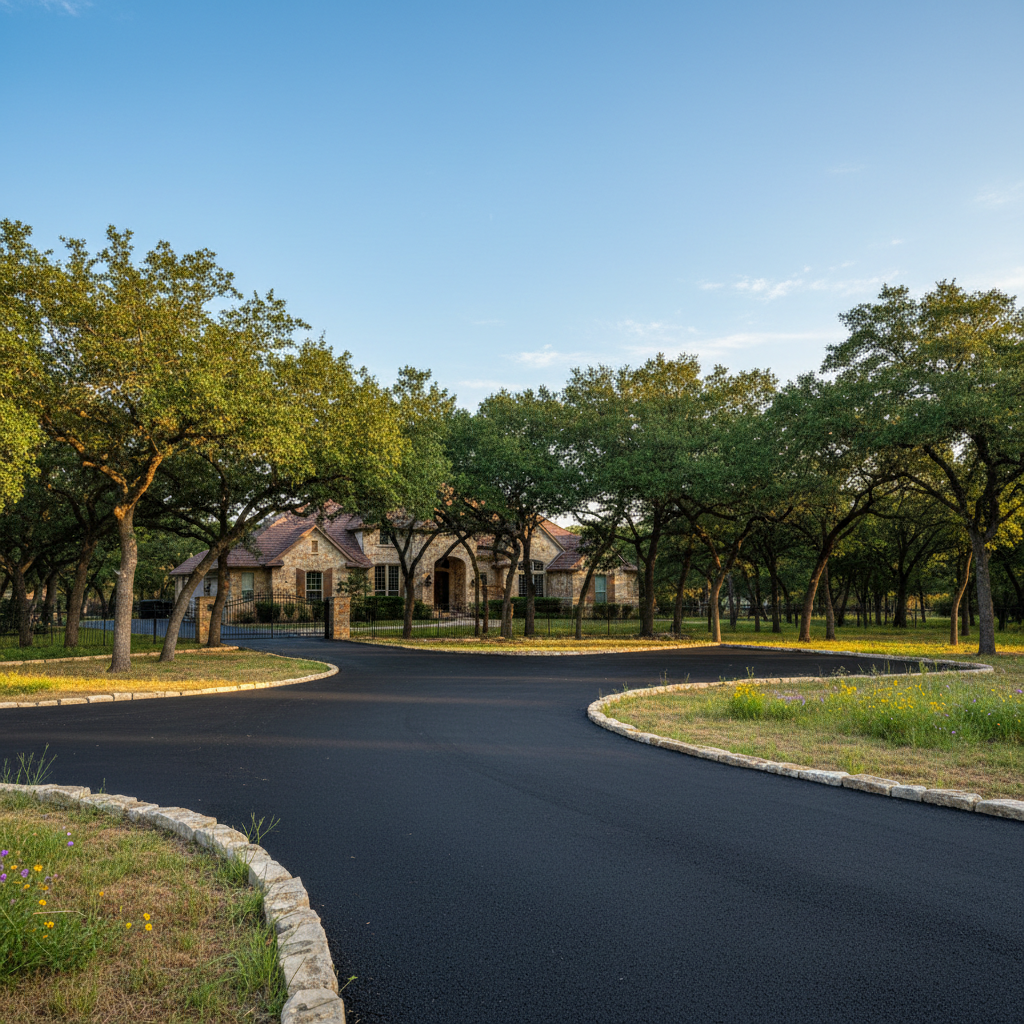
You’ve got a business here in New Braunfels, and you know first impressions count. That includes your parking lot or drive. But when’s the best time to tackle that paving project? It’s not as simple as picking a free weekend, especially with our Texas weather. I’ve seen a lot of asphalt come and go in this town, and I can tell you, timing is everything.
Why New Braunfels Weather Matters for Asphalt
Our climate down here in Central Texas is a beast of its own. We get those scorching summers, sudden cold snaps, and then there’s the humidity. All of it plays a role in how asphalt cures and how long it lasts. Asphalt needs specific conditions to set up properly. If it’s too hot, it can take longer to cure and stay soft. Too cold, and it won’t compact right, leading to cracking down the line. And don’t even get me started on rain – water is the enemy during installation.
Think about the clay soils we have around here, especially in areas like Gruene or out towards Canyon Lake. That expansive clay can shift with moisture, putting extra stress on your pavement. You need a good, stable base, and the right weather for the asphalt itself to bond correctly to that base.
Best Time to Schedule Your Paving Project
So, when’s the sweet spot? Generally, I tell folks the spring and fall are your best bets. We’re talking March through May, and then late September through November. Here’s why:
- Temperature: Asphalt needs ambient temperatures to be consistently above 50°F, but not so hot it’s cooking. Spring and fall give us those ideal daytime temps, usually in the 60s, 70s, or low 80s. This allows the asphalt to cool and compact correctly, giving you a strong, durable surface.
- Rainfall: While we can get spring showers, the sustained heavy rains of summer or the unpredictable downpours of hurricane season are less common in these shoulder months. You need a dry surface for proper adhesion and compaction.
- Humidity: Lower humidity helps the asphalt cure more efficiently. Our summers can be brutal with humidity, which isn't ideal for fresh pavement.
Trying to pave in July or August? You’re fighting 100-degree heat and high humidity. It can be done, but it adds challenges and can impact the long-term performance if not managed perfectly. Winter can be tricky too, with those sudden cold fronts dropping temperatures below optimal levels.
Protecting Your Investment Year-Round
Once your new asphalt is down, you want it to last, right? Here’s how you protect that investment:
- Sealcoating: This is your first line of defense. A good sealcoat every 2-3 years protects against UV rays, water penetration, and chemical spills like oil and gas. It’s like sunscreen for your parking lot.
- Crack Filling: See a crack? Fill it. Don’t wait. Water gets into those cracks, freezes, expands, and turns a small problem into a huge pothole. Our winter freezes aren't as bad as up north, but they still happen, and water will always find a way to undermine your base.
- Drainage: Make sure your drainage is working. Puddles sitting on your asphalt are bad news. They soften the surface and lead to premature deterioration. If you’ve got standing water, we need to address that.
- Regular Cleaning: Keep it clean. Debris can hold moisture against the surface. Oil and gas spills should be cleaned up quickly.
- Load Management: If you have heavy trucks, make sure your asphalt was designed for that load. Don’t let them sit in the same spot for extended periods, especially in the summer heat when the asphalt is softer.
At Ace Paving Co, we’ve been laying asphalt in New Braunfels for years. We know what works and what doesn’t in this climate. Don’t just get a quote; get advice from someone who understands the local conditions. We’re here to help you get a durable, good-looking surface that stands up to everything our Texas weather throws at it.