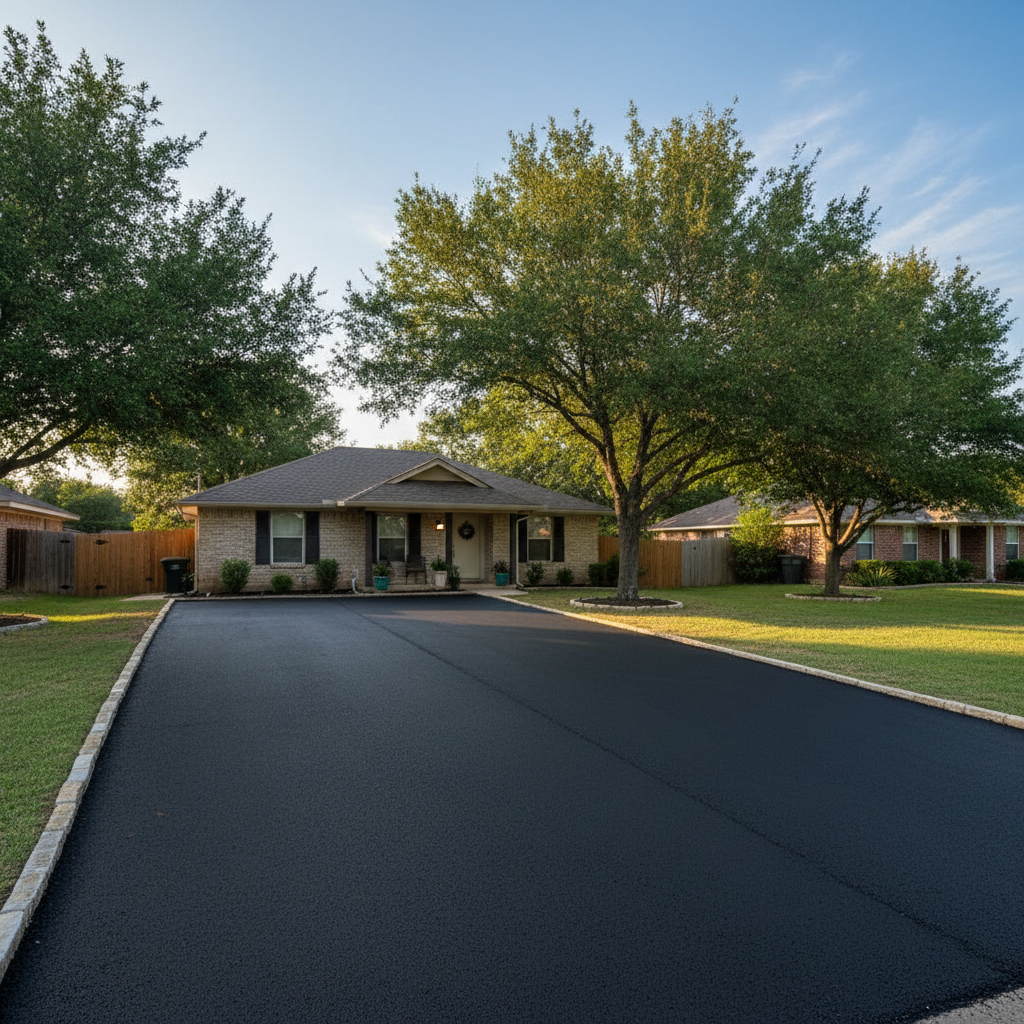
So, you're looking to pave or repave your driveway here in New Braunfels. Good call. A solid driveway isn't just about curb appeal; it's about functionality, safety, and protecting your vehicles. But let's be real, the first thing on most folks' minds is, "How much is this going to set me back?"
It's not a simple answer, but I can give you a clear picture of what goes into the cost. I've been doing this for a while with Ace Paving Co, and I've seen all kinds of projects, from small residential driveways to bigger commercial jobs. Here's the rundown on what you can expect.
What Really Drives Driveway Paving Costs?
There are a few big factors that swing the price tag up or down. You can't just throw out a number without knowing the specifics. Think of it like building a house – a lot goes into the final price.
- Material Choice: This is probably the biggest one. Asphalt is generally the most cost-effective option for driveways. Concrete will run you more, sometimes significantly more, especially for decorative finishes. We're talking asphalt usually in the $3-$7 per square foot range, while concrete can be $6-$15 per square foot, and even higher for stamped or colored concrete. That's just for the material and basic installation.
- Size and Shape: Makes sense, right? A bigger driveway means more material and more labor. A long, straight driveway is easier and quicker to pave than a winding one with lots of turns or irregular shapes. Every extra curve or angle adds time and specialized work.
- Existing Conditions & Prep Work: This is where a lot of hidden costs can pop up if you're not careful. If you've got an old driveway that needs to be torn out and hauled away, that's extra. If your sub-base (the dirt underneath) isn't stable or drains poorly, we'll need to do more excavation, add more aggregate, and compact it properly. Here in New Braunfels, with our clay soils in some areas, proper compaction and a good base are absolutely critical to prevent cracking and shifting down the line. Skimping on the prep work is a surefire way to have problems a few years later.
- Drainage Needs: Water is the enemy of any paved surface. If your property has drainage issues, we might need to install culverts, French drains, or grade the driveway in a specific way to direct water away from your home and the pavement itself. This is an added cost but a necessary one to protect your investment.
- Accessibility: If your property is tough to get to with heavy equipment, or if there are tight spaces that require more manual labor, that can add to the overall cost.
Typical Cost Ranges You Might See
Alright, let's get down to some numbers, keeping in mind these are averages for our area. These ranges include material, labor, and basic site preparation for a standard residential driveway.
- Asphalt Driveway: For a typical asphalt driveway, you're usually looking at somewhere between $3.50 and $8.00 per square foot. So, for a 600 square foot driveway (a common size for a two-car setup), that's roughly $2,100 to $4,800. A larger 1,000 square foot driveway could be $3,500 to $8,000. This range accounts for variations in base work and complexity.
- Concrete Driveway: Concrete is a step up in price. You're generally looking at $6.00 to $17.00 per square foot. That 600 square foot driveway would then be $3,600 to $10,200. For 1,000 square feet, you're in the $6,000 to $17,000 range. Stamped or colored concrete can push that even higher, sometimes up to $20+ per square foot, depending on the pattern and colors.
Remember, these are just averages. Your specific quote will depend on all those factors I just mentioned.
What Should Be Included in a Quote?
When you get a quote from Ace Paving Co or any other reputable contractor, it should be detailed. Don't accept a one-line price. Here's what you want to see:
- Site Preparation: This includes excavation, grading, removal of old material, and base material installation (type and depth of gravel/aggregate).
- Material Specifications: Clearly state whether it's asphalt or concrete, the thickness of the paving material, and any specific mix designs.
- Drainage Solutions: If any are needed, they should be itemized.
- Labor Costs: This is usually rolled into the per-square-foot price, but it's good to understand it's covered.
- Permits: If any local permits are required, who is responsible for obtaining them? (Usually the contractor.)
- Cleanup: What does the contractor do to clean up the site after the job is done?
- Warranty: A good contractor will offer a warranty on their work. Make sure you know what it covers and for how long.
How to Avoid Overpaying (and Under-Quality Work)
Nobody wants to get ripped off, and nobody wants a cheap job that falls apart in a year. Here's my advice:
- Get Multiple Quotes: This is a no-brainer. Get at least three detailed quotes. It helps you compare apples to apples and understand the market rate.
- Ask for References: A good contractor will happily provide references. Call them! Ask about their experience, the quality of the work, and if the job stayed on budget and schedule.
- Check Licenses and Insurance: Make sure the contractor is properly licensed and insured. This protects you if something goes wrong.
- Don't Go for the Lowest Bid Automatically: The cheapest bid often means corners are being cut. If one quote is significantly lower than the others, be very wary. Ask why. They might be skimping on base material, using thinner asphalt, or not doing proper drainage.
- Get Everything in Writing: Every detail, every cost, every agreement. A handshake is nice, but a written contract protects everyone.
- Understand the Scope: Make sure you and the contractor are on the same page about exactly what's being done. What's included, and what's not?
Investing in a new driveway is a big decision, but it's one that adds real value to your home. By understanding these factors and asking the right questions, you'll be well-equipped to get a fair price for quality work that lasts.